Ant problems are one of the most common pest issues homeowners face throughout New Jersey. From small kitchen trails to recurring infestations inside walls, ants can quickly become frustrating when store-bought sprays and bait stations fail to solve the problem long-term.
Many homeowners researching DIY ant control vs professional ant extermination in NJ are trying to determine whether store-bought products can truly eliminate an infestation or if professional treatment is the better long-term solution.
Many homeowners initially attempt DIY treatments because they seem convenient and affordable. In some situations, these methods may temporarily reduce visible ant activity. However, many infestations return within days or weeks because the colony itself was never eliminated.
Understanding the difference between DIY ant control vs professional ant extermination in NJ can help homeowners make smarter decisions, protect their property, and avoid wasting time and money on ineffective treatments.
Why Ant Problems Are So Common in New Jersey
New Jersey’s seasonal weather patterns create ideal conditions for ants throughout much of the year. Spring rain, summer humidity, moisture around foundations, and access to food sources all contribute to increased ant activity in homes and businesses.
Ants frequently enter properties searching for:
- Food crumbs and sugary residue
- Water and moisture sources
- Shelter during weather changes
- Safe nesting locations inside walls or wood
Once ants locate a reliable food or water source, they leave pheromone trails that attract additional worker ants. This is why homeowners often see small ant trails suddenly turn into larger infestations.
In counties like Mercer County, Monmouth County, Ocean County, Somerset County, and Middlesex County, homeowners commonly experience increased ant pressure during spring and summer months when colonies become more active.
Why DIY Ant Control Often Fails
One of the biggest misconceptions homeowners have is that killing visible ants solves the infestation. In reality, the ants you see are usually only a small percentage of the colony.
Many DIY products only target worker ants while leaving queens and hidden nesting sites untouched. As long as the colony survives, the infestation can continue returning.
This is why understanding DIY ant control vs professional ant extermination in NJ is so important for homeowners dealing with recurring infestations. Professional treatment focuses on locating and eliminating the source of the colony rather than simply reducing visible ant activity temporarily.
Many infestations continue because hidden colonies survive behind walls and foundations.
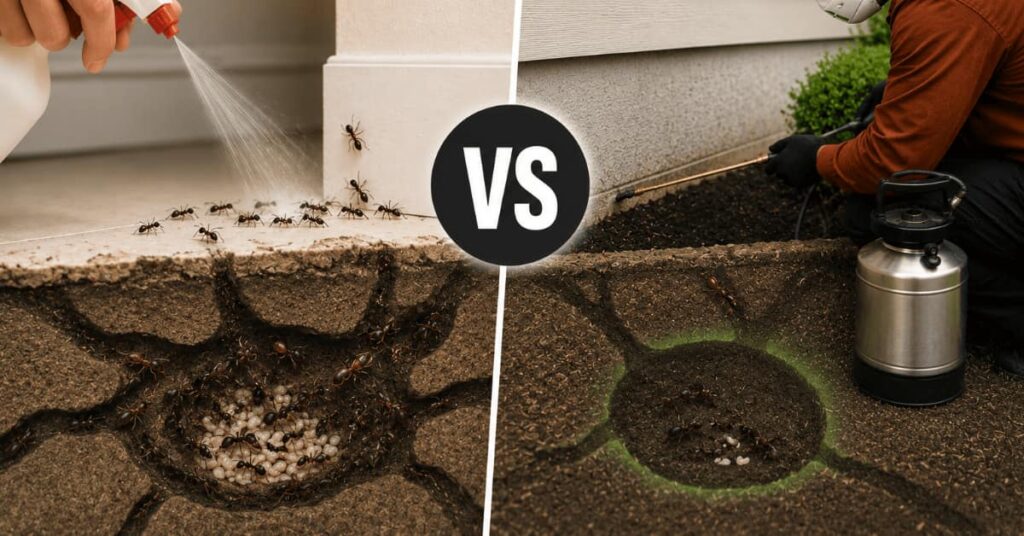
Professional ant extermination targets the source of the infestation, while many DIY products only reduce visible ant activity temporarily.
Common Reasons DIY Ant Control Fails
- Surface sprays kill visible ants only
- Colonies remain hidden behind walls or outdoors
- Incorrect bait products are used
- Entry points are never identified or sealed
- Moisture conditions continue attracting ants
- Multiple queens survive the treatment
This is especially common with species like Argentine ants and Pharaoh ants, which can split colonies and spread further when disturbed improperly.
Learn more here: Why Ants Keep Coming Back and How to Stop Them
Common DIY Ant Treatments Homeowners Use
There are many over-the-counter ant control products available today. While some can reduce activity temporarily, they often do not eliminate the root of the infestation. This is one reason many homeowners begin comparing DIY ant control vs professional ant extermination in NJ after repeated treatment failures.
Popular DIY Ant Treatments
- Ant sprays
- Ant bait stations
- Outdoor granules
- Vinegar and essential oil mixtures
- Store-bought perimeter sprays
- Homemade bait traps
DIY sprays may quickly kill ants on contact, but this often prevents worker ants from carrying bait back to the colony. In some cases, aggressive spraying can actually scatter the infestation and create additional nesting sites.
Bait stations can sometimes help with small infestations if the correct product is used for the specific species. However, incorrect bait selection is one of the most common reasons DIY ant treatments fail. This is another major factor in the ongoing debate over DIY ant control vs professional ant extermination in NJ, especially when homeowners are dealing with recurring infestations that continue returning despite repeated treatment efforts.
Different Ant Species Require Different Treatments
One major challenge with DIY ant control is that homeowners often do not know which species they are dealing with.
Different ant species behave differently:
- Some prefer sweets
- Others seek proteins or grease
- Some nest outdoors
- Others build colonies inside walls or wood
Using the wrong bait or treatment approach can reduce effectiveness dramatically.
For example:
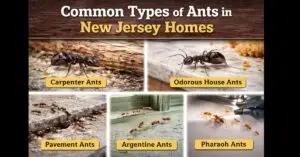
- Carpenter ants often require moisture correction and direct nest treatment
- Odorous house ants respond differently to bait strategies
- Pharaoh ants can spread if treated incorrectly
- Pavement ants typically enter through foundation cracks
Professional exterminators identify the species before designing a treatment plan.
Learn about species identification here: Common Types of Ants in New Jersey Homes
When DIY Ant Control May Work
There are situations where DIY ant control can help reduce minor problems temporarily.
Small infestations may respond if:
- The colony is outdoors only
- Ant activity is isolated to one area
- Entry points are identified early
- Sanitation issues are corrected quickly
For example, a small trail near a kitchen window may disappear after cleaning food residue and applying a properly placed bait product.
However, if the infestation continues returning or spreads to additional rooms, the colony likely remains active nearby.
Signs You Need Professional Ant Extermination in NJ
Persistent infestations usually indicate that professional treatment is necessary. Many homeowners researching DIY ant control vs professional ant extermination in NJ reach this stage after repeated store-bought treatments fail to stop ants from returning.
Signs You Should Call an Ant Exterminator
- Ants keep returning after treatment
- Activity spreads to multiple rooms
- You see large numbers of ants daily
- Carpenter ants are present
- Ants are emerging from the walls or ceilings
- Outdoor colonies continue expanding
- DIY treatments no longer work
Recurring infestations are especially common in homes with moisture issues, structural gaps, or hidden nesting locations. In many situations, the ongoing frustration homeowners experience is what leads them to compare DIY ant control vs professional ant extermination in NJ in search of a more permanent solution.
Professional extermination focuses on eliminating the entire colony—not just the visible ants.
The Benefits of Professional Ant Extermination
Professional pest control provides a far more comprehensive approach than store-bought treatments alone. Rather than simply treating visible ants, professional exterminators focus on identifying the source of the infestation and preventing future colony activity.
An experienced ant exterminator can:
- Correctly identify the ant species
- Locate hidden nesting sites
- Apply targeted treatment methods
- Identify entry points around the home
- Reduce conditions attracting ants
- Create long-term prevention strategies
Professional services also help reduce the risk of improper chemical application inside the home while improving overall treatment effectiveness.
In many cases, homeowners spend significant money repeatedly purchasing sprays, bait stations, and perimeter products without ever resolving the underlying infestation. Over time, professional treatment often becomes the more cost-effective long-term solution.
When comparing DIY ant control vs professional ant extermination in NJ, professional services typically provide longer-lasting results because they target the source of the infestation rather than only reducing visible ant activity temporarily.
Carpenter Ants Require Special Attention
Carpenter ants are one of the most serious ant species found in New Jersey homes because they can damage wood structures over time.
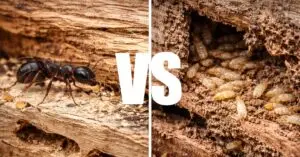
Unlike termites, carpenter ants do not eat wood. Instead, they excavate smooth tunnels inside damp or weakened wood to create nesting galleries.
Homeowners may notice:
- Wood shavings (frass)
- Large black ants indoors
- Rustling sounds inside the walls
- Activity near moisture-damaged areas
Because carpenter ants often indicate moisture issues, treatment may involve correcting environmental conditions in addition to extermination.
Compare wood damage here: Carpenter Ant Damage vs Termite Damage in NJ
How New Jersey’s Climate Contributes to Ant Infestations
New Jersey weather creates ideal conditions for many ant species throughout the year.
Spring rain increases moisture around foundations, while summer humidity encourages nesting activity. During periods of extreme heat or heavy rainfall, ants often move indoors searching for stable conditions.
Homes in Central and Coastal New Jersey may experience increased activity because of:
- High humidity
- Foundation moisture
- Dense landscaping
- Seasonal weather changes
- Soil conditions near structures
For additional regional pest insights, homeowners can review Rutgers Cooperative Extension pest resources, which provide educational information about pest behavior and prevention in New Jersey.
DIY Ant Control vs Professional Ant Extermination: Which Saves More Money?
At first glance, DIY ant control may appear cheaper. However, recurring infestations often lead homeowners to repeatedly purchase sprays, traps, bait stations, and perimeter products.
Over time, these costs can add up—especially when the infestation never fully disappears.
Professional extermination may help homeowners:
- Avoid repeated product purchases
- Reduce property damage risks
- Eliminate colonies faster
- Prevent recurring infestations
- Save time and frustration
This is especially important when carpenter ants are involved because delayed treatment can increase structural repair costs.
Preventing Future Ant Problems in NJ Homes
Long-term prevention is one of the most important parts of successful ant control.
Prevention Tips for NJ Homeowners
- Seal cracks and foundation gaps
- Fix plumbing leaks and moisture problems
- Store food in airtight containers
- Keep landscaping trimmed away from the home
- Remove standing water around the property
- Schedule routine pest inspections
Reducing food, water, and shelter sources makes your home far less attractive to ant colonies.
Why Professional Identification Matters
Many homeowners misidentify ants completely. Carpenter ants are often confused with termites, while small nuisance ants are frequently mistaken for one another.
Accurate identification matters because:
- Different species require different baits
- Nesting habits vary significantly
- Some infestations spread if disturbed incorrectly
- Colony structure impacts treatment success
Professional exterminators understand these behavioral differences and tailor treatments accordingly.
Protecting Your NJ Home from Recurring Ant Infestations
Recurring ant problems are rarely random. Most infestations continue because the colony survives nearby or environmental conditions remain favorable.
Professional treatment helps identify:
- Where ants are entering
- Why they are returning
- Which species is present
- How to prevent reinfestation
Without addressing these factors, even aggressive DIY treatment may provide only temporary relief.
Trusted Ant Control Services in New Jersey
If ants continue returning despite your efforts, professional treatment may be the most effective long-term solution. Recurring infestations often indicate that hidden colonies, moisture conditions, or structural entry points are still allowing ants to survive and spread throughout the property.
At Terminator Termite and Pest Management, we provide expert ant control and extermination services throughout Mercer County, Monmouth County, Ocean County, Somerset County, and Middlesex County, New Jersey. Our team identifies the source of infestations, targets hidden colonies, and develops long-term prevention strategies designed for lasting protection.
For homeowners comparing DIY ant control vs professional ant extermination in NJ, professional service can provide more effective and longer-lasting results by addressing the root cause of the infestation rather than simply reducing visible ant activity temporarily.
Learn more here: Ant Control Services in New Jersey and contact Terminator Termite & Pest Management today.
FAQs
Does DIY ant control actually work?
DIY treatment may help with small infestations temporarily, but many infestations return because hidden colonies survive.
Why do ants keep coming back after spraying?
Most sprays kill only visible worker ants while the colony and queens remain active nearby.
Are professional ant exterminators worth it?
Professional extermination often provides longer-lasting results because treatments target the entire colony and contributing conditions.
What type of ants are most common in NJ homes?
Odorous house ants, pavement ants, carpenter ants, Argentine ants, and Pharaoh ants are all commonly found in New Jersey.
Can carpenter ants damage a home?
Yes. Carpenter ants excavate wood to build nests and can weaken structural components over time.
How can I prevent ants from returning?
Reducing moisture, sealing entry points, maintaining sanitation, and scheduling routine inspections all help reduce future infestations.