If you’ve noticed winged insects, wood damage, or unusual activity around your home, you may be asking: how do I know if I have termites or ants? This is one of the most common questions homeowners have—especially in New Jersey, where both pests are active.
At first glance, termites and carpenter ants look very similar. Both swarm in the spring, both have wings, and both are associated with wood damage. But the truth is, understanding the difference between termites and ants is critical—because the treatment approach is completely different.
Identifying the problem early can save you from costly repairs and long-term structural damage.
Termites vs Carpenter Ants: Why Identification Matters
When comparing termites vs carpenter ants, many homeowners assume they’re dealing with the same pest—but they behave very differently.
- Termites eat wood and can silently destroy your home
- Carpenter ants tunnel through wood to build nests, but do not eat it
Because of this, misidentifying the pest can lead to ineffective treatment and worsening damage.
How to Tell the Difference Between Termites and Carpenter Ants
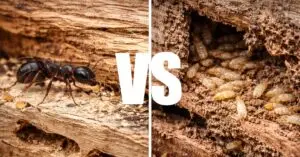
If you’re wondering how to tell the difference between termites and carpenter ants, there are a few key physical characteristics to look for.
Carpenter Ant Identification
- Segmented body (head, thorax, abdomen)
- Narrow, pinched waist
- Elbowed (bent) antennae
- Front wings larger than back wings
- Usually dark brown, black, or reddish
Termite Identification
- Straight, uniform body (no narrow waist)
- Straight antennae
- Wings equal in size
- Light-colored, white, or translucent appearance
Quick Visual Clue That Homeowners Miss
One of the easiest ways to answer “do I have termites or carpenter ants in my house?” is by looking at the wings:
- Equal wings → likely termites
- Uneven wings → likely ants
This small detail can make a big difference in proper identification.
Signs of Termites vs Ants in Your Home
Knowing the signs of termite infestation vs ants can help you act before serious damage occurs.
Common Signs of Termites
- Mud tubes along walls or foundation
- Hollow-sounding wood
- Discarded wings near windows or doors
- Buckling paint or flooring
According to the U.S. Environmental Protection Agency, mud tubes are one of the most reliable indicators of active termite activity.
Common Signs of Carpenter Ants
- Piles of sawdust-like wood shavings (frass)
- Rustling or movement inside the walls
- Visible ants, especially at night
- Moist or decaying wood areas
Where to Check for Nests and Activity
Both termites and ants prefer similar environments, which can make identification more confusing.
High-Risk Areas in NJ Homes
- Crawl spaces
- Basements
- Around windows and doors
- Under sinks (moisture areas)
- Attics and rooflines
If you’re unsure how to identify termites vs ants in NJ homes, these areas are the best place to start your inspection.
How Termites Damage Your Home
Termites are one of the most destructive pests homeowners face. They consume wood from the inside out, often going unnoticed until significant damage has occurred.
What Makes Termites So Dangerous
- Constant feeding on structural wood
- Hidden damage behind walls
- Rapid colony growth
- Expensive repair costs
They can damage:
- Support beams
- Flooring
- Wall structures
- Wooden furniture
How Carpenter Ants Cause Structural Damage
While carpenter ants don’t eat wood, they still create serious problems.
How Carpenter Ants Damage Property
- Hollow out wood for nesting
- Expand tunnels over time
- Target moist or weakened wood
The presence of wood shavings (frass) is one of the clearest indicators of carpenter ants.
Why DIY Identification Often Fails
Many homeowners try to identify pests on their own—but misidentification is extremely common.
Common Mistakes
- Assuming all winged insects are termites
- Ignoring early warning signs
- Treating ants when termites are present
- Using ineffective store-bought solutions
If you’re still asking “how do I know if I have termites or ants?”, it’s often best to have a professional inspection done.
What to Do If You Suspect Termites or Carpenter Ants
If you notice any signs of activity, taking immediate action is critical.
Steps to Take Right Away
- Avoid disturbing the area (can spread infestation)
- Take note of where activity is seen
- Check for moisture issues
- Schedule a professional inspection
Early detection is the key to minimizing damage and treatment costs.
Protect Your Home with Expert Pest Identification in NJ
Correctly identifying whether you’re dealing with termites or carpenter ants is the first step toward protecting your home. Waiting too long can lead to extensive structural damage and higher repair costs.
Terminator Termite and Pest Management provides expert termite inspections and treatment, and carpenter ant control throughout Mercer, Middlesex, Ocean, Monmouth, and Somerset County. The team will accurately identify the pest, eliminate the infestation, and help prevent it from coming back.
Schedule your inspection today and get clarity before the damage spreads.