NJ Gets More Ticks? That is the Question
Ticks have become one of the most common pest concerns homeowners report throughout New Jersey each year. While neighboring states also experience seasonal tick activity, many homeowners ask the same question: Why does it seem NJ gets more ticks than other states?
The answer is not caused by a single issue. Tick populations are influenced by weather patterns, wildlife movement, suburban development, vegetation, humidity, and the way residential properties connect to surrounding natural environments.
Across Monmouth County, Middlesex County, Somerset County, Mercer County, and Ocean County, many properties unintentionally create ideal conditions for ticks to survive, reproduce, and move closer to areas where families spend time outdoors.
Understanding why tick populations remain active across New Jersey may help homeowners identify conditions why NJ gets more ticks that contribute to increased exposure and understand when prevention strategies may become beneficial.
Why New Jersey Creates Ideal Conditions for Tick Populations
New Jersey provides several environmental conditions that support long periods of seasonal tick activity.
Ticks require moisture to survive and generally perform better in environments that offer humidity, shade, wildlife access, and protected ground cover.
Many areas throughout New Jersey contain combinations of:
• Mature landscaping
• Wooded residential edges
• Dense shrub growth
• Wildlife corridors
• Moist soil conditions
• Groundcover vegetation
• Leaf accumulation
• Suburban development patterns
Unlike highly urbanized environments or open agricultural areas, suburban neighborhoods often create transitional zones where ticks thrive. These environments are common throughout Central New Jersey and may contribute to higher reports of tick encounters.
Deer, Mice, and Wildlife Create a Continuous Tick Cycle
Many homeowners assume deer are entirely responsible for tick populations. While deer are an important factor, the reality is more complicated. Ticks rely on multiple hosts throughout their lifecycle. Small mammals, especially mice, frequently support immature ticks during development. Deer often transport adult ticks across larger areas.
When both populations overlap near residential neighborhoods, conditions may support continued tick movement.
Common wildlife contributors include:
• White-tailed deer
• Field mice
• Squirrels
• Rabbits
• Raccoons
• Ground-feeding birds
Residential landscapes that border wooded areas may experience increased exposure simply because wildlife routinely travels across those properties.
Why Suburban Neighborhoods Often Experience More Tick Activity
One reason ticks in New Jersey receive so much attention is that suburban development creates ideal habitat overlap.
Many neighborhoods are built directly beside:
• Wooded parcels
• Conservation land
• Stream corridors
• Open recreation areas
• Greenbelts
• Preserved acreage
Rather than separating people from wildlife, suburban growth often places residential areas immediately adjacent to tick habitat. Homeowners sometimes maintain lawns carefully while overlooking landscape edges. Tick populations often concentrate where maintained areas transition into unmanaged vegetation.
Examples include:
• Fence lines
• Decorative shrubs
• Retaining walls
• Wood piles
• Property boundaries
• Mulched beds
• Tree lines
These overlooked locations may support continued activity even when lawns appear clean.
Mild Winters May Extend Tick Season Across New Jersey
Another factor influencing tick activity is winter survival. Historically, colder winters naturally reduced some seasonal populations. However, milder winter conditions may allow more ticks to survive into spring. Earlier seasonal activity means homeowners may begin noticing ticks sooner than expected.
Tick activity is not limited to peak summer. Depending on environmental conditions, activity may begin earlier and continue later into the year.
This may increase opportunities for exposure during:
• Spring cleanup
• Gardening
• Outdoor sports
• Pet activity
• Backyard entertaining
• Landscaping projects
Why Humidity Matters More Than Temperature
Many people assume heat alone causes tick problems. Humidity often plays a larger role. Ticks lose moisture quickly when exposed to direct sun and dry conditions. Properties with retained moisture may become more supportive.
Conditions that may encourage survival include:
• Heavy mulch
• Dense planting beds
• Irrigation overspray
• Shaded corners
• Thick vegetation
• Limited airflow
Even properties that appear maintained can contain microenvironments favorable to ticks.
Where Ticks Commonly Hide Around Residential Properties
Homeowners frequently inspect open grass while overlooking areas that support higher concentrations. Ticks typically wait in vegetation and transfer onto hosts as movement occurs.
Areas worth monitoring include:
• Landscape borders
• Property edges
• Decorative grasses
• Low shrubs
• Leaf buildup
• Outdoor seating areas
• Pet paths
• Under decks
• Garden transitions
Because ticks do not jump or fly, reducing contact areas often becomes an important part of prevention.
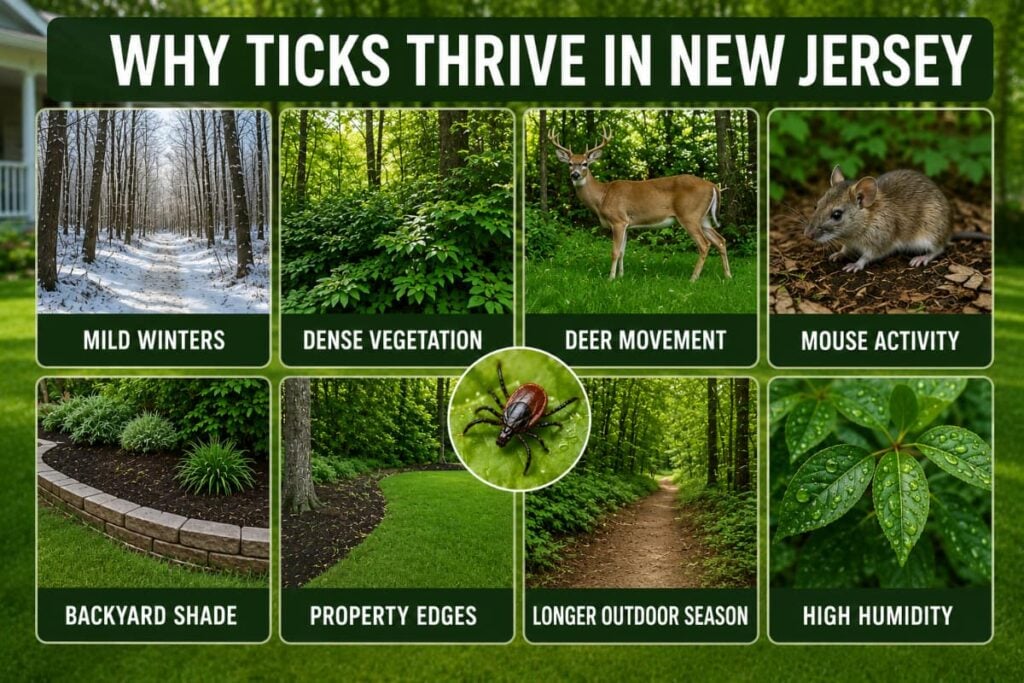
Several environmental and property conditions may contribute to seasonal tick activity throughout New Jersey.
Why Tick Concerns Extend Beyond Lyme Disease
Many homeowners immediately associate ticks with Lyme disease. While Lyme disease remains an important concern, ticks may also carry additional pathogens depending on species and exposure.
Awareness surrounding tick activity has increased because homeowners are becoming more proactive after bites and sightings. An increase in awareness may also contribute to more inspections and prevention efforts.
Learn more about Ticks with the CDC
How Property Maintenance May Influence Tick Exposure
Complete elimination of outdoor tick activity is rarely realistic. Reducing favorable conditions may help lower exposure opportunities.
Property maintenance considerations include:
• Trimming vegetation
• Reducing leaf buildup
• Improving airflow
• Creating separation zones
• Managing wildlife access
• Maintaining landscape transitions
• Monitoring pet areas
Small adjustments may help reduce areas where ticks remain active.
Why Families Often Notice Ticks More During Summer
Summer creates more opportunities for interaction. Children play outdoors more frequently. Pets move through vegetation. Backyards become active gathering spaces.
The increase in activity often leads homeowners to believe that populations have suddenly increased. In reality, exposure opportunities may simply become more frequent.
Professional Tick Treatment May Be Considered for Persistent Activity
Some homeowners continue noticing ticks despite maintenance improvements. Professional inspections may help identify conditions that support recurring activity.
Situations that may justify evaluation include:
• Multiple sightings each week
• Frequent pet exposure
• Tick encounters near patios
• Property backing to woods
• Dense landscape zones
• High outdoor use areas
Professional treatment plans may focus on targeted reduction strategies around areas where people spend time.
Reduce Tick Exposure Around Your Property This Season
Outdoor spaces should feel comfortable throughout the season. If you continue noticing tick activity around landscape beds, wooded edges, patios, or pet areas, Terminator Termite and Pest Management can help evaluate conditions and provide treatment recommendations designed around your property.
Service Areas:
Monmouth County • Middlesex County • Somerset County • Mercer County • Ocean County